Are Bernese Mountain Dogs Easy to Train? Temperament and Trainability FAQ
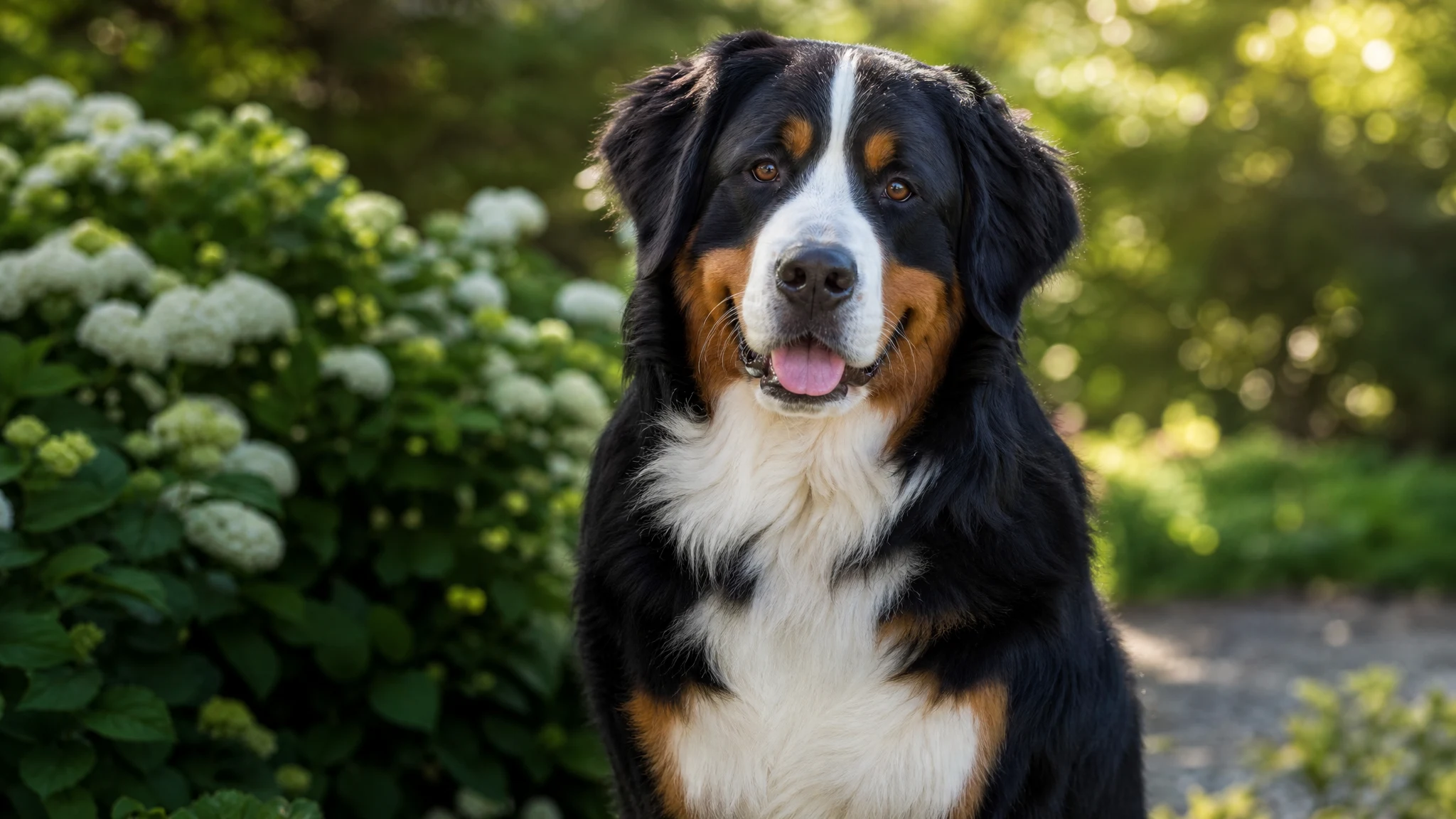
General training information. Every dog is an individual; for health or behavior concerns, see your veterinarian.
Most people who ask whether Bernese Mountain Dogs are easy to train really want to know what living with one will be like. The short version: this is a sensitive, good-natured breed that responds best to gentle, reward-based teaching. It is not a breed that suits harsh handling.
Below are 20 common questions, grouped by theme. For the full step-by-step approach, see our complete guide to training a Bernese Mountain Dog.
Trainability and Intelligence
1. Are Bernese Mountain Dogs easy to train?
Many owners find them rewarding to train, mainly because the breed is good-natured and tuned in to people. Hill's Pet describes them as sensitive, which means gentle, positive methods fit well. I could not confirm the American Kennel Club's own trainability rating, so check the AKC breed page for it. Any individual dog can differ from the breed picture.
2. Are Bernese Mountain Dogs smart?
The breed standard from the Bernese Mountain Dog Club of America (BMDCA) describes temperament, not intelligence scores. It calls the breed self-confident, alert and good-natured. Neither the club nor Hill's gives an intelligence ranking, so I will not invent one. What you can say is that an alert, people-oriented dog usually has plenty to work with when training is clear and kind.
3. What does Bernese Mountain Dog trainability actually depend on?
Bernese Mountain Dog trainability depends a lot on how you teach. Hill's says harsh corrections or loud voices can shut this breed down. Calm cues, small steps and rewards your dog loves keep learning going. Consistency from everyone in the house matters too.
4. Do they respond to food rewards and praise?
Hill's recommends gentle, positive methods for the breed, and food, praise and play are the usual tools for that. Find out which rewards your own dog values most and save the best ones for harder tasks. Keep sessions short and upbeat so your dog stays eager.
5. Are they stubborn?
Neither the BMDCA standard nor Hill's calls the breed stubborn. A sensitive dog that goes quiet or slow under pressure can look stubborn when it is actually overwhelmed. If your dog stalls, lower the difficulty, soften your tone and reward the smallest step in the right direction.
Temperament
6. What is the Bernese Mountain Dog temperament?
The BMDCA breed standard, which is the AKC standard, calls the breed self-confident, alert and good-natured, never sharp or shy. That is the ideal the breed is judged against. Real dogs vary, so raise and socialize yours with care.
7. Are they friendly with strangers?
Not always instantly. The breed standard allows the dog to stay aloof with strangers. Aloof is different from aggressive, but it is a reason to introduce new people and places early and calmly, with rewards for relaxed behavior.
8. Are they good with children?
Hill's describes the breed as patient and gentle when well socialized. That wording comes from Hill's, not an AKC rating. Even so, supervise all play between dogs and young children, and teach children to be gentle and to let the dog walk away.
9. Are they good with other dogs?
I could not confirm an AKC rating for how the breed gets along with other dogs, so check the AKC breed page or ask the BMDCA. Careful, positive introductions and well-run puppy or group classes are sensible for any dog. Watch your own dog's comfort level rather than relying on a label.
Energy, Barking and Daily Life
10. How much energy do they have?
Hill's rates the breed 3 out of 5, moderate energy. It suggests one to two daily walks or hikes with light play or enrichment. That is a manageable routine for many households, though it still has to happen every day.
11. Do Bernese Mountain Dogs bark a lot?
Hill's rates barking at 2 on its scale, which it labels quiet. Your dog may still alert you to visitors, since the standard calls the breed alert. Teach a calm "thank you, that's enough" routine and reward quiet.
12. Does shedding affect training?
Indirectly. Hill's says the breed sheds year-round and heavily in spring and fall. Regular grooming is part of life with a Bernese, so teach your dog to stand and relax for brushing using treats and short, happy sessions.
13. Is heat a problem for training?
Hill's lists heat sensitivity as a challenge for the breed. Plan training and exercise for cooler parts of the day and keep sessions short in warm weather. If you are worried about your dog's tolerance of heat, ask your veterinarian.
Who the Breed Suits
14. Are Bernese Mountain Dogs good for first-time owners?
They can be, if you are willing to be patient, gentle and consistent. The sensitive temperament forgives a lot of mistakes better than harshness ever would, but you must commit to kind methods. Heavy shedding and size are practical considerations as well. A good class and the guide linked above help a lot.
15. How big do they get, and why does it matter for training?
The breed standard gives dogs 25 to 27.5 inches and bitches 23 to 26 inches at the withers. Hill's gives a weight range of 70 to 115 pounds, with males heavier. A big dog that pulls or jumps is hard to manage, so teach loose-leash walking and polite greetings from the start.
16. What was the breed originally for?
Hill's says they were working farm dogs in the Swiss Alps, from the Bern canton, herding livestock, guarding property and hauling carts. That history is why many owners enjoy giving the dog a job. Simple tasks like fetching or carrying can be rewarding for both of you.
17. Are there dog sports for the breed?
Yes. The BMDCA describes conformation, companion, performance and draft events at its National Specialty. Regional clubs hold Draft, Rally and Obedience events, and the club awards Draft, Working Dog and Versatility titles. Contact the BMDCA or a regional club to learn what is near you.
Myths and Health
18. Is it a myth that gentle dogs do not need training?
Yes. A calm, friendly dog still needs manners, and the standard's allowance for aloofness with strangers is a reason to socialize. Good nature gives you a head start, not a finished dog.
19. Do they need a firm hand or dominance?
No. Training in line with the American Veterinary Society of Animal Behavior favors reward-based methods, and Hill's says this breed is sensitive to harsh handling. Avoid shock, prong or choke collars, alpha rolls and scruffing. They risk fear and damage trust.
20. Can health affect trainability?
It can. If your dog suddenly seems unwilling, stiff or uncomfortable, talk to your veterinarian before assuming it is a behavior problem. The BMDCA recommended testing page lists hips, elbows, eyes, heart and degenerative myelopathy (DM), plus one optional test. Ask breeders about these results. For lifespan, Hill's says 7 to 10 years, while the club says 7 to 8 years is too short.