Bernese Mountain Dog Sports and Jobs: Putting the Breed's Instincts to Work
General training information. Every dog is an individual; for health or behavior concerns, see your veterinarian.
A Bernese Mountain Dog that has nothing to do can be a big, fluffy, slightly bored housemate. A Bernese with a job tends to look pleased with itself. This breed was built to work, and giving your dog a purpose is one of the kindest things you can do for it.
This guide walks you through choosing and starting an activity. It covers what the main events are, why they suit the breed, and how to find a way in through the parent club and local groups. Every dog is an individual, so treat this as a map, not a promise.
Why the Bernese Mountain Dog Is a Natural Working Dog
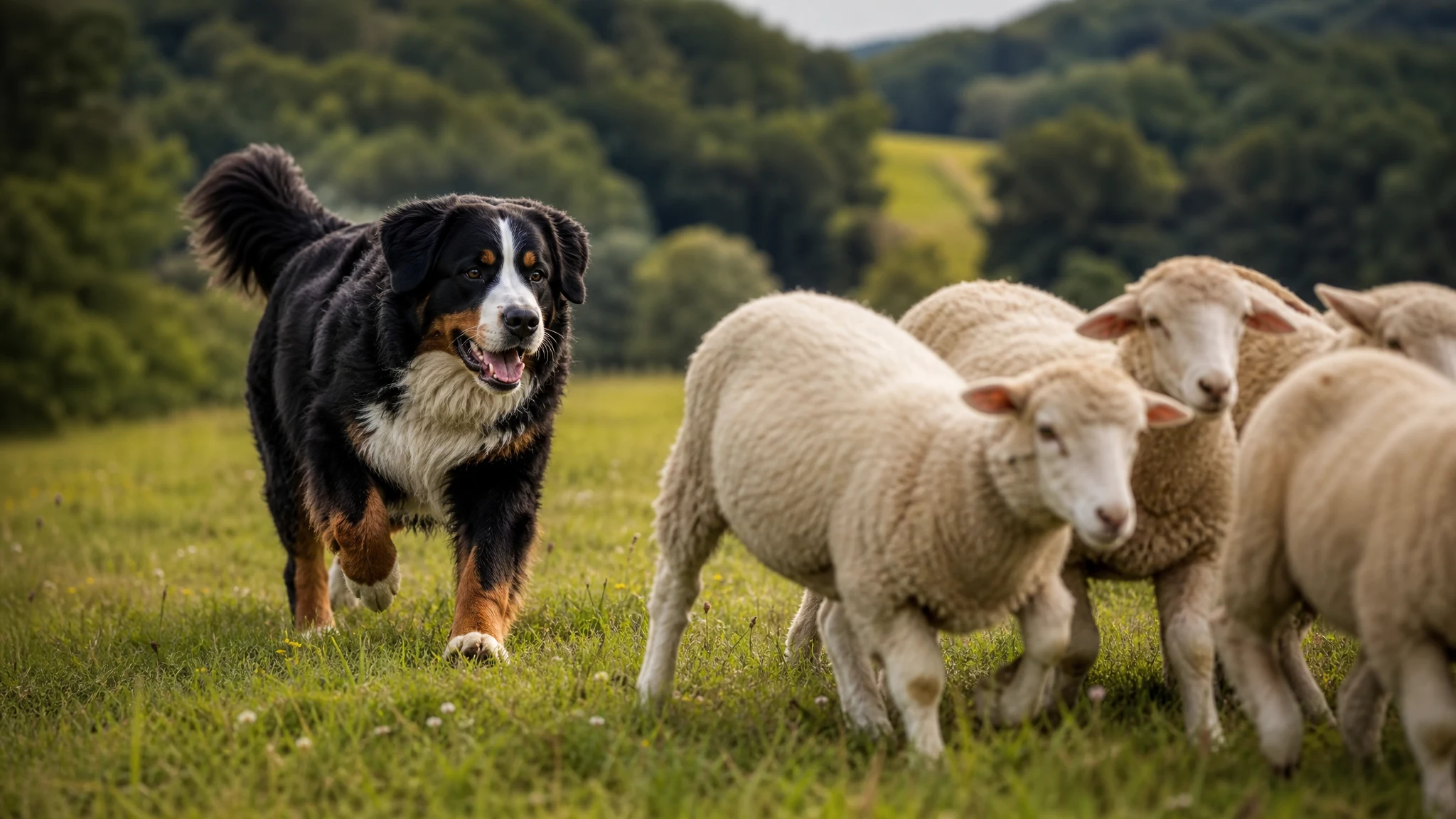
The Bernese Mountain Dog comes from the canton of Bern in the Swiss Alps. According to the Hill's Pet breed page, it was a working farm dog there. Its jobs included herding livestock, guarding property and hauling carts.
That history explains a lot. A Bernese working dog was expected to be steady, strong and willing to cooperate with its people all day. The breed standard, which the Bernese Mountain Dog Club of America (BMDCA) publishes as the AKC standard, describes the temperament as self-confident, alert and good-natured, never sharp or shy. It also allows the dog to stay aloof with strangers.
Hill's rates the breed's energy at 3 on a 1 to 5 scale, which it calls moderate. So this is not a dog that needs to run for hours. It does well with purposeful activity paired with calm time at home. Hill's suggests one to two daily walks or hikes with light play or enrichment as a baseline. Sports and jobs are what you add on top.
The Main Sports and Jobs to Consider
The BMDCA says its National Specialty includes conformation, companion, performance and draft events. Regional clubs hold Draft, Rally and Obedience events. The club also awards Draft, Working Dog and Versatility titles. Here is what that means for dog sports for Bernese Mountain Dogs.
Draft work (carting)
Draft work means the dog pulls a cart. It is the most direct link to the breed's original job of hauling carts in the Alps. It rewards calm, steady behavior around movement and noise, which many owners find fits their dog well. The BMDCA awards Draft titles, and regional clubs hold Draft events.
Rally
In Rally, you and your dog move through a course of signs. Each sign tells you which skill to perform. It is more relaxed than traditional obedience because you can talk to your dog and encourage it as you go. For a sensitive breed, that friendly format is a good fit. Regional Bernese clubs hold Rally events.
Obedience
Obedience tests precision and reliability in basic skills. It builds focus and manners that carry over into daily life. Regional clubs hold Obedience events too.
Conformation
Conformation is the show ring, where dogs are judged against the breed standard. It is part of the National Specialty. It suits owners who enjoy the breed's look and structure and want to be part of the show community. Ask the BMDCA or a regional club how to get started.
Working Dog and Versatility titles
The BMDCA awards Working Dog and Versatility titles. These recognize a dog's range of abilities, not one narrow skill. The club's own pages are the place to read the exact requirements, since this article does not list them.
Materials You Will Need
- A well-fitted flat collar or a comfortable harness, plus a standard leash. Use whatever your instructor or club recommends for a specific event.
- Small, soft treats your dog loves, cut into tiny pieces.
- A favorite toy for dogs that enjoy play as a reward.
- Fresh water and a shaded spot to rest, because Hill's lists heat sensitivity as a challenge for the breed.
- A calm, quiet space for short practice sessions.
- Event-specific gear, such as a cart and harness for draft work. Ask the club or an experienced draft owner before buying anything.
- Your veterinarian's input before you start, especially for physically demanding activities.
Step-by-Step: Getting Started
Step 1: Check in with your veterinarian
Before you ask your dog to pull, jump or work for long periods, talk with your vet. Ask whether your dog is physically ready for the activity you have in mind. The BMDCA's recommended testing page lists hips, elbows, eyes, heart and Degenerative Myelopathy (DM), plus one optional test. It is worth talking over your dog's own health picture with your vet. Never guess about pain or soreness. Your vet is the right person for any health question.
Step 2: Build the foundation first
Every sport rests on basic skills like sit, down, loose-leash walking and coming when called. If those are shaky, start there. Our complete guide to Bernese Mountain Dog training covers the basics step by step.
Step 3: Pick one activity to try first
Choose based on your dog and your own interests. A dog that is calm around movement may enjoy draft work. A dog that loves close teamwork with you may like Rally. Start with one so neither of you feels overwhelmed.
Step 4: Find a local club or class
Look for a regional Bernese Mountain Dog club or a local training club that offers classes in your chosen activity. The BMDCA, the parent club at bmdca.org, is the best starting point for finding regional clubs. For events outside the breed clubs, the AKC lists its own sports and events on its website. Visit a class or event as a spectator first. Watch how the instructors treat the dogs. You want a group that uses rewards and patience.
We cannot tell you what is offered in your area or what it costs. Contact the clubs directly for schedules, fees and entry requirements.
Step 5: Keep sessions short and positive
Hill's describes the Bernese as sensitive, so harsh corrections or loud voices can shut the dog down. Gentle, positive methods fit the breed. That matches the humane, reward-based approach recommended by the American Veterinary Society of Animal Behavior. Practice for a few minutes, reward generously and stop while your dog is still keen.
Step 6: Introduce new things slowly
New equipment, new places and new people should arrive one at a time. For draft work, let your dog sniff the harness and cart while they are still, and reward calm curiosity. Do not hitch a dog to a cart before it is relaxed with each piece. An experienced draft instructor can guide the pace.
Step 7: Socialize along the way
The standard allows the dog to be aloof with strangers, which is why socialization matters. Class and event settings are good practice. Let your dog watch from a comfortable distance and reward calm behavior around new people, dogs and sounds. Do not force greetings.
Step 8: Work up to events gradually
Once your dog is steady in class, consider a fun match or a spectator visit to an event. Ask the club which events welcome beginners. Check the official rules for your chosen event, because requirements are set by the organizations that run them.
Tips for Success
- Mind the weather. Heat sensitivity is a known challenge for the breed. Train in the cool parts of the day and give plenty of breaks.
- Use quiet praise. A calm, warm voice works better than excitement for a sensitive dog.
- Keep it fun. If your dog seems stressed, back up to an easier step.
- Go to the source. Read rules on the BMDCA or AKC sites, not from hearsay.
- Join the community. Experienced Bernese owners are often glad to share tips on getting started.
Common Mistakes to Avoid
- Pushing too hard, too fast. Rushing a dog into a cart or a crowded ring can backfire. Go slowly.
- Using harsh corrections. Shock, prong or choke collars, alpha rolls and scruffing have no place in training. They can damage trust, and this breed is sensitive.
- Skipping the vet check. Physical activity should match your dog's health and condition.
- Overheating your dog. Watch for heavy panting or lagging, and stop to rest in the shade.
- Buying gear first. Learn what your instructor or club recommends before you spend money.
- Expecting a stereotype. Individual dogs vary. Yours may love one sport and ignore another, and that is fine.
What You Can Reasonably Expect
With regular, positive practice, many owners find their Bernese gains focus, confidence and a stronger bond with them. A job may also help the dog settle at home, though results differ from dog to dog.
Progress usually comes in small steps. Some dogs take to carting in a few sessions, and others need much longer. A calmer, more engaged dog is a reasonable hope, not a certainty. If something does not seem to be working, a qualified, reward-based instructor can help you adjust.
Remember that the breed's lifespan is a reason to enjoy your time together. Hill's gives a range of 7 to 10 years, while the BMDCA's health page says 7 to 8 years is too short. Either way, purposeful, happy time with your dog is worth building into your days.
Final Thoughts
Bernese Mountain Dog sports are about more than ribbons and titles. They give a dog bred for farm work something meaningful to do with the person it loves. Start with a vet check, build your basics, find a kind club, and let your dog show you what it enjoys.